I am grateful for trigeminal neuralgia (TN) and the other pains I experience (mainly arthritic and migraine) which have taught me the invaluable lesson of slowing down, getting off the gravy train, as it were, reassessing why I am here and what life is all about.
Without these severe and ongoing 'intrusions' into my life, I would still be chasing empty dreams without knowing why or where I was going. Rather than experiencing and exploring my pain, I would be suffering desperately and collapsing under its weight . Instead of being able to observe from the outside without the distractions of 'work', 'commitments' and 'duties', I would still be trapped in the matrix of 'convention', unable to see myself clearly let alone find a way out. Without the pain, I would not have found the strength and commitment to search for holistic healing within.
TN and other pains have released me from the bonds of conventionality into a wonderful, painful yet fulfilling evolution where spiritual and emotional growth are just as valued, if not more so, than physical and mental growth.
Because of the blessings of neuralgia and rheumatoid arthritis, I feel more whole, focused and on the right path. I appreciate that it is often difficult to change the suffering mindset at first, but I hope, one day, we can all find the abundant blessings within our pain.
Blessings, patience and peace x
Friday, 22 June 2012


Tuesday, 12 July 2011
Book Review: We by Yevgeny Zamyatin
 We by Yevgeny Zamyatin
My rating: 5 of 5 stars
Wonderful little book with big content. Perfectly apt for these changing times, We was written by Yevgeny Zamyatin almost a century ago yet its basic premise of human kind's desire for happiness has altered little.
Set in the future, the story of We is narrated by Number D-503 and written as his report of events preceding the launch of the INTEGRAL spaceship of which he is designer and engineer. The spaceship will take his report and other manifestations of the glorious One-State in which D-503 lives, along with its ideas of a perfect world, to other planets and galaxies beyond Earth, enabling others to benefit from One-State's ultimate wisdom and achievement of happiness for all.
As D-503 describes his life and how happiness has been acquired, we see that all is not as rosy as it might be, particularly with the threats to coherence that lie not just in the unknown world beyond the Green Wall surrounding One-State but also within, from human kind itself.
A brilliant, enthralling read.
View all my reviews
Wednesday, 17 November 2010
The Continuum Concept Review
 The Continuum Concept: In Search of Happiness Lost by Jean Liedloff
My rating: 5 of 5 stars
The premise and basic concept of this wonderful book can be life-changing in a very positive, long-term way. To summarise it crudely, the act of being held and physically carried around (by a parent, sibling and/or other carer) as a new born and growing baby can have an incredibly positive and essential influence on our consequential life experience. Conversely, if this stage of development is missed out or reduced (as it is with most of us born into so called 'modern civilization'), this has a detrimental, but not irreparable, effect.
The author explains the concept and how she came to discover it through her experiences with the Yubena tribe in South America. As a piece of anthropological and social research, The Continuum Concept is an amazing yet common sense realisation and most readers will probably find themselves thinking "oh yes, of course" as the book progresses. To give the Concept full justice however, requires (for most of us) a whole new approach to the way we rear our own children, help raise, educate and otherwise interact with children in our community and, perhaps most promisingly, the way we view our own childhood and relationship with our parents and/or caregivers - and thus ultimately, the way we view ourselves.
There are snippets of outdated comments particularly regarding the role of mothers and women and some in regard to race. I found myself mentally editing parts of the text as I read and do believe that a re-edit would prove useful to make the book as accessible as possible, to as wide a readership as the content merits. However, given that it was written in the 70s, these points are mere trifles compared to the bulk of the book and it's wealth of advice and potential for human benefit.
An essential read for anyone who wants to contribute positively to the evolvement of humankind and live more peacefully with ourselves and each other.
View all my reviews
Wednesday, 5 May 2010
TV Worth Watching: The Edible Garden
 Presenter Alys Fowler takes us through her wonderfully lush urban garden in which she uses permaculture techniques to produce a space full of beauty and sustainability. This first episode of the series includes layout of Alys' garden, aquisition of two generous chickens - Gertrude and Alice, planting and picking of peas and beans, amazingly easy and versatile pea-shoots, recipes for no-faff falafel and peatini cocktail - yummm, and so much more. Enjoy!
From: Alys Fowler, BBC Two - The Edible Garden
"Why I garden. I garden because I am hungry. Or more precisely because I have a hunger, one that can only be satisfied through soil and satiated through fresh growth. I garden because I have to, it is how I define who I am, it is one of the ways I make sense of this world and it is how I pay back my place in it. Over the years I have come to see is not just that I garden, but how I garden that matters.
Making The Edible Garden has been about finding a way to garden that is as gentle as possible upon the world. A garden that will please and feed me and still be a home for all others that visit it. By choosing to grow my vegetables alongside my flowers in a perfectly pleasing muddle that is polyculture, I have found a way that allows the best of all worlds.
The aim is to eat at least one meal a day from the garden throughout the growing season and to have enough loving thing in the store cupboard to keep the winter bearable.
I’ve gathered some friends together for this journey. Some will tell you about permaculture, others about how to make delicious things with stuff that you grow or find - everyone shares one common belief about how happiness is formed; that real pleasure is something that is created not bought."
Further Info: BBC Two - The Edible Garden
Friday, 26 February 2010
Book Review: Eco Baby, Sally Jane Hall
 Eco Baby: A Guide to Green Parenting by Sally Jane Hall
My rating: 3 of 5 stars
This is a very well laid out guide to help us minimise consumption of products and goods when having a baby. Sally demonstrates that much of what we are told or think we need when a new life enters is unecessary at best and can be dangerous at worst. For those items that are healthy, useful and essential, Sally provides great references and links to organisations that supply more sustainable products than mainstream.
Eco Baby is easy to read and very useful for anyone wanting to stick to or take on green principles when contemplating pregnancy, birth and beyond. I have given it 3 rather than 4 stars simply because I would have liked a bit more in-depth information about sustainable practices that make consumption even less necessary. For readers relatively new to ideas of ethics and sustainability though, this book will provide a great starting point for eco child-rearing.
View all my reviews >>
Friday, 12 February 2010
TV Worth Watching: Let There Be Light
 1 hour left to watch this first in a series of programmes about Light and how we are affected and affect it. Fascinating!
From: BBC iPlayer: Factual | History
"Series in which Professor Simon Schaffer explores man's fascination with light begins by revealing the unwitting role religion played in forging our scientific understanding of the properties of light.
He reveals the extraordinary lengths to which the early light pioneers went to unlock the mysteries of light. The Greek philosopher Empedocles marked his theory that light travels like laser beams from our eyes by throwing himself into the volcano Mount Etna.
The Roman Church's obsession with Easter forced it to turn a blind eye to its own doctrines, as the religious authorities sanctioned the conversion of cathedrals into massive sun clocks, a move that would eventually drive the rabidly anti-Catholic Isaac Newton to unravel the true essence of light."
Broadcast on: BBC Four, 8:00pm Thursday 4th February 2010
Duration: 60 minutes
Available until: 8:59pm Thursday 11th February 2010
More Info
Friday, 15 January 2010
Interpreting Signs
 I had the song You Can Call Me Al by Paul Simon playing in my head this morning for some reason... but couldn't remember all the words or put them in the right order.
Looking up the lyrics on Metro Lyrics I re-discovered some wonderfully potent writing by Paul Simon. The words seem to be very relevant to this present time where many of us feel lost and confused about the purpose of our being here on this curious little planet. Where we wonder around from situation to situation, seeking the things we are told may be of benefit - fame, family, sex, someone to imitate and learn from. In this present time we may find some of these 'saviours' but still feel empty to the core.
My interpretation of the song, with absolutely no pretense at knowledge of Mr. Simon's intent is thus:
The song follows a man's life with each successive era succinctly summed up in metaphoric experiences during a walk down the street. Maybe it's the same street, maybe in different places, maybe in different times. It is the street that flows through his life. Or perhaps it is the street followed by his soul travelling through successive lifetimes.
He - Al - feels the soft centre of his existence even at the start of his journey, the place where something sacred should be. Where something sacred, now forgotten, once was. Perhaps at this stage he feels that a challenge would offer the opportunity for him to win back what was lost. He wants a shot at redemption for fear of continuing in emptiness.
Afraid of finding no meaning and becoming no more than an animated character with no real purpose he searches for truth in obsolete places plagued by moonlit mutts barking a message he cannot yet hope to understand. They may be distracting demons or assisting angels but Al cannot decipher the dogs so shoes them away in frustration all the while dreaming of the light calling him home.
The chorus sounds like a plea for assistance, a true friend in a world of illusion. He offers himself in exchange for a guide.
I imagine many of us can relate to the 'short little span of attention' which seems all pervasive in these times of speedy internet with multi-tasking windows and simultaneous tabs as well as quick-fix technology where the controls seem to be set on permanent fast-forward. Can anyone else remember the time when we'd focus on / read thoroughly /use one single page, screen or programme on our computers for a few hours without even thinking about flicking to another programme, another tab, clicking another internet link, quickly watching a video, briefly scanning a news page for information, downloading something in the background to look at later, and so on? All this whilst having a 'conversation' with a colleague or loved one!
The second street continues Al's search for something to validate his existence and shorten the long nights of despair. He wonders why the things he was promised or imagined would come his way have not yet appeared. With no guide in sight he tries to distract himself with meaningless relationships that lead only to more sorrow.
In the final stage of his life / journey, Al finds himself in a place he either does not know or cannot remember. Maybe it is the same street that he is approaching with fresh eyes, seeing familiar sights anew. He has to start his journey again, this time with nothing but what he carries inside himself for support. However Al seems less afraid of this than in his previous journeys. Perhaps the soft centre has begun to fill up.
We can imagine Al closing his eyes to take in the cacophony of sound surrounding him in the market place. The critical sounds of life seem like music to his ears. Opening his eyes and looking up he sees 'angels in the architecture, spinning in infinity'. These signs, audible and visual - which undoubtedly surrounded him all the time - can finally be seen for what they are. These vital clues help him to re-member who he is, why he is here, what this life is all about. He says, Amen! and Hallelujah! A perfect ending indeed.
Here are the lyrics courtesy of Metro Lyrics:
"A man walks down the street,
He says, Why am I soft in the middle now?
Why am I soft in the middle?
The rest of my life is so hard!
I need a photo-opportunity,
I want a shot at redemption!
Don't want to end up a cartoon,
In a cartoon graveyard...
Bonedigger, Bonedigger,
Dogs in the moonlight.
Far away, my well-lit door.
Mr. Beerbelly, beerbelly,
Get these mutts away from me!
You know, I don't find this stuff amusing anymore...
If you'll be my bodyguard, I can be your long lost pal!
I can call you Betty, And Betty, when you call me,
You can call me Al!
A man walks down the street,
He says, Why am I short of attention?
Got a short little span of attention,
And whoa, my nights are so long!
Where's my wife and family?
What if I die here?
Who'll be my role-model?
Now that my role-model is
Gone... gone,
He ducked back down the alley,
With some roly-poly, little bat-faced girl.
All along... along...
There were incidents and accidents,
There were hints and allegations...
If you'll be my bodyguard, I can be your long lost pal!
I can call you Betty, And Betty, when you call me,
You can call me Al! Call me Al...
A man walks down the street,
It's a street in a strange world.
Maybe it's the Third World.
Maybe it's his first time around.
He doesn't speak the language,
He holds no currency.
He is a foreign man,
He is surrounded by the sound, sound...
Cattle in the marketplace.
Scatterlings and orphanages[Scatterings and oranges?].
He looks around, around...
He sees angels in the architecture,
Spinning in infinity,
He says, Amen! and Hallelujah!
If you'll be my bodyguard, I can be your long lost pal!
I can call you Betty, And Betty, when you call me,
You can call me Al! You can call me Al..."
Thursday, 7 January 2010
TV Worth Watching: Dear Diary
Dear Diary
Episode 1: Richard E Grant
From: BBCiPlayer
"The first in a series of three programmes asking what we get from reading, and writing, diaries.
Writing a diary can be dangerous. As can reading one. Richard E Grant, a diarist since childhood, uncovers the power of the diary. He considers the diaries of Joe Orton, Kenneth Williams, Erwin James, John Diamond and Rosemary Ackland and asks whether a diary should, or could, ever be totally honest, wholly accurate and absolutely true.
Richard talks with Joe Orton's sister, Leonie, about her long-held belief that Orton's confessional diary was actually responsible for him losing his life. Richard also meets prison diarist Erwin James to understand the power of writing for a serving offender. Joss Ackland tells Richard about editing his wife's 50-plus years of diary writing. And Richard meets with Sheila Hancock to talk about Kenneth Williams' diary, in which she appeared many times. Williams had a charming public face. But in the diaries he could be savage. He even wrote that he'd never again speak to Sheila Hancock."
Broadcast on: BBC Four, 12:40am Tuesday 5th January 2010
Duration: 60 minutes
Available until: 12:59am Tuesday 26th January 2010
Further Info:
Dear Diary
TV Worth Watching? Growing Young
History Of Now: The Story of the Noughties
Part 1: Growing Young
From: BBC iPLayer
 "The first of three films exploring what it was like to live through the last decade, and the surprising, often hidden connections which are shaping the 21st century.
During the Noughties, an ageing Britain became obsessed with recapturing its youth. The result: trends and fads such as kidults, micro scooters and 'middle youth'. But at the same time, the generation gap emerged as the most significant split in society. While older people pursued a more youthful image, real young people were demonised as 'hoodies'.
Reflecting on the decade we spent 'growing young' are a host of leading commentators and experts including Andrew Marr, Tanya Byron and Will Self. Along the way we discover how rave culture led to binge-drinking, learn about Britain's 'baby gap', and find out why downloads saved the Millennium Dome."
Broadcast on: BBC Two, 9:00pm Tuesday 5th January 2010
Duration: 60 minutes
Available until: 9:59pm Friday 15th January 2010
Further Info:
History of Now: The Story of the Noughties
Part 1: Growing Young
From: BBC iPLayer
"The first of three films exploring what it was like to live through the last decade, and the surprising, often hidden connections which are shaping the 21st century.During the Noughties, an ageing Britain became obsessed with recapturing its youth. The result: trends and fads such as kidults, micro scooters and 'middle youth'. But at the same time, the generation gap emerged as the most significant split in society. While older people pursued a more youthful image, real young people were demonised as 'hoodies'.
Reflecting on the decade we spent 'growing young' are a host of leading commentators and experts including Andrew Marr, Tanya Byron and Will Self. Along the way we discover how rave culture led to binge-drinking, learn about Britain's 'baby gap', and find out why downloads saved the Millennium Dome."
Broadcast on: BBC Two, 9:00pm Tuesday 5th January 2010
Duration: 60 minutes
Available until: 9:59pm Friday 15th January 2010
Further Info:
History of Now: The Story of the Noughties
Tuesday, 5 January 2010
Real England by Paul Kingsnorth
This month I am mostly reading:
 "A wonderfully passionate exploration of the onslaught against non-commercialised, non-corporate life in Britain. From the closing of local shops to the death of the farming communities, Paul focuses on the human cost of these changes. ‘Real England’ serves as an important reminder of what’s at stake with the corporate takeover of Britain, and also leaves us with some optimism by showing green shoots of resistance, as people begin rising to the challenge of resistance against the onslaught."
This brief review is by Housmans where you can purchase a copy online here or instore here:
Housmans, 5 Caledonian Road, King’s Cross, London N1 9DX
t: 020 7837 4473 | e: shop@housmans.com
"A wonderfully passionate exploration of the onslaught against non-commercialised, non-corporate life in Britain. From the closing of local shops to the death of the farming communities, Paul focuses on the human cost of these changes. ‘Real England’ serves as an important reminder of what’s at stake with the corporate takeover of Britain, and also leaves us with some optimism by showing green shoots of resistance, as people begin rising to the challenge of resistance against the onslaught."This brief review is by Housmans where you can purchase a copy online here or instore here:
Housmans, 5 Caledonian Road, King’s Cross, London N1 9DX
t: 020 7837 4473 | e: shop@housmans.com
Wednesday, 2 December 2009
A Gift, The Dream And You
 "...The most unrealistic person in the world is the cynic, not the dreamer. Hope only makes sense when it doesn’t make sense to be hopeful. This is your century. Take it and run as if your life depends on it."
This truly inspirational address by author, journalist and environmentalist, Paul Hawken at the University of Portland Commencement 2009, speaks many truths about why we are here and what we could be creating and giving back - both individually and collectively - during the precious time we have been given on this wonderous planet.
From: Paul Hawken, Commencement Address 2009, University Of Portland
"Let’s begin with the startling part. Class of 2009: you are going to have to figure out what it means to be a human being on earth at a time when every living system is declining, and the rate of decline is accelerating. Kind of a mind-boggling situation... but not one peer-reviewed paper published in the last thirty years can refute that statement. Basically, civilization needs a new operating system, you are the programmers, and we need it within a few decades.
This planet came with a set of instructions, but we seem to have misplaced them. Important rules like don’t poison the water, soil, or air, don’t let the earth get overcrowded, and don’t touch the thermostat have been broken. Buckminster Fuller said that spaceship earth was so ingeniously designed that no one has a clue that we are on one, flying through the universe at a million miles per hour, with no need for seatbelts, lots of room in coach, and really good food—but all that is changing.
There is invisible writing on the back of the diploma you will receive, and in case you didn’t bring lemon juice to decode it, I can tell you what it says: You are Brilliant, and the Earth is Hiring. The earth couldn’t afford to send recruiters or limos to your school. It sent you rain, sunsets, ripe cherries, night blooming jasmine, and that unbelievably cute person you are dating. Take the hint. And here’s the deal: Forget that this task of planet-saving is not possible in the time required. Don’t be put off by people who know what is not possible. Do what needs to be done, and check to see if it was impossible only after you are done.
When asked if I am pessimistic or optimistic about the future, my answer is always the same: If you look at the science about what is happening on earth and aren’t pessimistic, you don’t understand the data. But if you meet the people who are working to restore this earth and the lives of the poor, and you aren’t optimistic, you haven’t got a pulse. What I see everywhere in the world are ordinary people willing to confront despair, power, and incalculable odds in order to restore some semblance of grace, justice, and beauty to this world. The poet Adrienne Rich wrote, “So much has been destroyed I have cast my lot with those who, age after age, perversely, with no extraordinary power, reconstitute the world.” There could be no better description. Humanity is coalescing. It is reconstituting the world, and the action is taking place in schoolrooms, farms, jungles, villages, campuses, companies, refuge camps, deserts, fisheries, and slums..."
Full inspirational speech here
Further Info:
Portland University Commencement / Paul Hawken
Thursday, 8 October 2009
The Beekeeper, Tori Amos
 The Beekeeper by Tori Amos is a song too beautiful for words so I'll only attempt a few. Somehow I only discovered this track very recently (perhaps the time was right) and I cannot stop listening to it. The section that immediately and most intensely struck me is the main chorus:
""Do you know who I am" she said "I'm the one, who taps you on your shoulder, when it's your time. Don't be afraid, I promise that she will awake tomorrow""
On a spiritual adventure of my own the idea of being awakened at a certain time - the right time - by someone or something tapping me on the shoulder rang true. The music accompanying the lyrics is utterly poignant and stirs my heart and soul.
Having sought out (thanks to Lyrics Mania) and read the whole lyrics, I have a sense - which could easily be entirely wrong - that Tori may have been writing about the loss of a child who only just or didn't quite make it into this world from the other. The painful anguish of loss and desperation are intense. The desire to make sense of something so sad makes for enchanting listening.
"Flaxen hair blowing in the breeze
It is time for the geese to head south
I have come with my mustard seed
I cannot accept that she will be taken from me
"Do you know who I am" she said
"I'm the one who taps you on the shoulder when it's your time
Don't be afraid I promise that she will awake
Tomorrow somewhere, tomorrow somewhere"
Wrap yourself around the tree of life
And the dance of the infinity
Of the hive
(Take this message to Michael)
I will comb myself into chains
In between the tap dance clan
And your ballerina gang
I have come for the beekeeper
I know you want my
You want my queen
Anything but this
Can you use me instead?
In your gown with your breathing mask on
Plugged into a heart machine
As if you ever needed one
I must see the beekeeper
I must see if she'll keep her alive
(Call Engine 49)
I have come with my mustard seed
Maybe I'm passing you by
Just passing you by girl
I'm passing you by
On my way, on my way
I'm just passing you by
But don't be confused
One day I'll be coming for you...
I must see the beekeeper
I must see the beekeeper"
Tuesday, 6 October 2009
Corinne Bailey Rae: Life Drifted By...
Corinne Bailey Rae: 'It happened to me. It could happen to anyone at any time'
From out of the darkest place, following the sudden death of her husband, Corinne Bailey Rae is re-emerging with an extraordinarily intimate and impassioned album. Here she talks about grief and the redemptive power of music
Sean O'Hagan, The Observer, 4Oct09
"...Then came the strange inertia that grief instils in those left behind, the long, terrible numbness that is, in itself, a kind of death. "I didn't do anything for a year. I mean, nothing," she says, still sounding as if she can barely believe it. "Everyone was asking, 'What have you done?' But I had nothing to show them. I didn't go anywhere. I didn't write anything. I didn't work. I sat at my kitchen table for a whole year, people came and people went, life drifted by. It was just bleak. Bleak."
Did she think that she might give up music altogether? "I did think that I could never do this sort of thing again because if anyone asked me about Jason, I would just explode. For a long time, I didn't even try and write. It was just too big a thing, too raw. It was just too destructive to make anything creative out of. All I wanted to do was destroy things. And I'm really not that type so it was all these emotions that were totally alien to me. It was just a bleak, empty, hollow nothing.""
Full article here
Saturday, 29 August 2009
Hawksmoor: Short Review
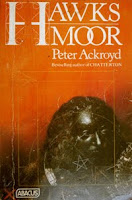 Hawksmoor by Peter Ackroyd is:
Awesome, in the truest sense of the word. A veritable labyrinth of clever and intriguing word play caught between the glass frame of a paper weight in which all time is no time and no time is now! Shake it up and watch the effects. Wonderful!
Tuesday, 18 August 2009
The Preciousness of Books
I have so many favourite books my top 10 is often changing but will probably always include T.S. Eliot's The Wasteland which I can read over and over and over... Peter Ackroyd's Hawksmoor and J.D Salinger's Franny & Zooey all of which had a profound effect on me when first reading, plus I studied the former two in school at a particularly tempestuous time in my life! I lost myself totally in the magic of the stories and words and was quite swept up in the drama of other worlds and lives.
Whilst movies can, and indeed have, had a similar effect on me, I find that the effects don't last as long or go as deep. There is something about reading from a real book, held in our hands, carried around with us for days/weeks/months even years, the fold of the corners when a book mark has been misplaced, the smell of new paper or even better, the smell of musty bookshelves acquired from a second-hand book store, the scribbles made by previous readers, their name printed neatly or scrawled carelessly on the inside cover, a certain timeless quality, all these things, along with engaging contents of course, make a book far more potent than even the best film ever could be (and I do love a good movie). Perhaps it's the ability to touch and hold and thus feel more engaged with a book than one can with a dvd which relies on a machine to be played or a film viewed at the cinema with many other people.
This is an excerpt from a discussion started by Maddy called Has Reading Become A Lost Art on Ooffoo.com. Read the full article here.
Wednesday, 1 July 2009
Underworld by Don DeLillo is long but worth a read
Don DeLillos's Underworld is as relevant and valid today as it was at time of publication some ten years ago. In that time so much has happened and yet precious little has changed.
 I acquired Underworld by Don DeLillo over 10 years ago as a result of having studied and enjoyed the author's book White Noise at university. I desperately wanted to read more work of this person who seemed to have his fingers on the pulse of our era as well as a good grasp of the past events, both small and sizeable, that helped to form the present. He also seemed to dislay an almost uncanny insight into the future.
DeLillo has the magical ability to present the varying strands of our current ethos, culture, lifestyles and ideologies in succinct form without foregoing any of the vital minutiae of daily life that make up these things. One minute his characters are discussing, quite seriously, the merits of wearing sunscreen in the desert, for example, and in the very same sentence or paragraph we realise that they are also commenting on the atomisation of society at large. The author manages to do this without any of the usual jarring gaps in flow and avoids any sense of disconnect. The books - all those I've had the good fortune to read - flow like understated but crucially zeitgeist movies - think American Dream and perhaps sometimes Donny Darko.
Reading DeLillo's work (I can't bring myself to use the words 'novel' or 'story' as they seem too trite descriptions for works so intrinsically linked to real life) is like watching a perfect mix of documentary and fictionalized drama that blends so well it is almost impossible to tell what is 'real' and what isn't. In this way his work is simply a mirror on our lives. If you cannot find yourself, or at least a part of yourself in his work, perhaps your existence is questionably.
Back to Underworld, which I wanted to read and attempted to at least hit the 100 page mark before giving up (as advised by one of my English tutors at school) several times over the last ten years. The size of the book overwhelmed me however and in conjunction with the highly americanised subject of the first chapters - baseball - which I felt no desire to even try to relate to, meant that I quit after only a few pages several times over. Size (and sport) are not everything however and honestly, I think I was just not ready for Underworld. Not yet ready to understand its simple complexities and appreciate the subject matter from a well balanced distance matched with the closeness of experience.
Until late last year. Now I am finally ready to devour this book in a way I could not have done ten years ago. I have just passed the half way mark (in page terms) and am as excited about it as I was at the start. The characters are familiarly intriguing, their personalities forming, dissolving, adapting before my eyes as DeLillo takes his readers backwards and forwards in time. The events of over 50 years played and replayed from different angles with clues and signs dished out here and there. I feel as though I've been given special privilege to wallow through restricted archives on vast micro-fiche, piles of newspapers, audio and film reels and diaries.
The specifics of Underworld's era, from Cold War fever, J Edgar Hoover's paranoia through 70's alternative counter-culture, consumerist ignorance and the shameful wastefulness of post war periods right through to the present, are as relevant today, if not more so, than they were in the late 90s. I would highly recommend this book as both fascinating fiction and documentary research of why we are where we are today.
I acquired Underworld by Don DeLillo over 10 years ago as a result of having studied and enjoyed the author's book White Noise at university. I desperately wanted to read more work of this person who seemed to have his fingers on the pulse of our era as well as a good grasp of the past events, both small and sizeable, that helped to form the present. He also seemed to dislay an almost uncanny insight into the future.DeLillo has the magical ability to present the varying strands of our current ethos, culture, lifestyles and ideologies in succinct form without foregoing any of the vital minutiae of daily life that make up these things. One minute his characters are discussing, quite seriously, the merits of wearing sunscreen in the desert, for example, and in the very same sentence or paragraph we realise that they are also commenting on the atomisation of society at large. The author manages to do this without any of the usual jarring gaps in flow and avoids any sense of disconnect. The books - all those I've had the good fortune to read - flow like understated but crucially zeitgeist movies - think American Dream and perhaps sometimes Donny Darko.
Reading DeLillo's work (I can't bring myself to use the words 'novel' or 'story' as they seem too trite descriptions for works so intrinsically linked to real life) is like watching a perfect mix of documentary and fictionalized drama that blends so well it is almost impossible to tell what is 'real' and what isn't. In this way his work is simply a mirror on our lives. If you cannot find yourself, or at least a part of yourself in his work, perhaps your existence is questionably.
Back to Underworld, which I wanted to read and attempted to at least hit the 100 page mark before giving up (as advised by one of my English tutors at school) several times over the last ten years. The size of the book overwhelmed me however and in conjunction with the highly americanised subject of the first chapters - baseball - which I felt no desire to even try to relate to, meant that I quit after only a few pages several times over. Size (and sport) are not everything however and honestly, I think I was just not ready for Underworld. Not yet ready to understand its simple complexities and appreciate the subject matter from a well balanced distance matched with the closeness of experience.
Until late last year. Now I am finally ready to devour this book in a way I could not have done ten years ago. I have just passed the half way mark (in page terms) and am as excited about it as I was at the start. The characters are familiarly intriguing, their personalities forming, dissolving, adapting before my eyes as DeLillo takes his readers backwards and forwards in time. The events of over 50 years played and replayed from different angles with clues and signs dished out here and there. I feel as though I've been given special privilege to wallow through restricted archives on vast micro-fiche, piles of newspapers, audio and film reels and diaries.
The specifics of Underworld's era, from Cold War fever, J Edgar Hoover's paranoia through 70's alternative counter-culture, consumerist ignorance and the shameful wastefulness of post war periods right through to the present, are as relevant today, if not more so, than they were in the late 90s. I would highly recommend this book as both fascinating fiction and documentary research of why we are where we are today.

Saturday, 2 May 2009
First Female Poet Laureate
From: Alison Flood, Guardian, 1May09
"Four hundred years of male domination came to an end today with the election of Carol Ann Duffy as poet laureate. Duffy, the widely-tipped favourite for the post, only agreed to accept the post ahead of poets Simon Armitage and Roger McGough because "they hadn't had a woman".
Speaking on Woman's Hour this morning on Radio 4, she revealed that she had thought "long and hard" about accepting the offer.
"The decision was purely because they hadn't had a woman," she said. "I look on it as recognition of the great women poets we now have writing, like Alice Oswald.""
Full article here
Thursday, 23 April 2009
Who Is Running The Show?
No individual species is 'in control' of the planet. We are all part of the same ecosystem. Each species plays its part and is as vital as the next.
The sooner we, as human beings, realise that we are simply part of the planet and all the species, resources and elements contained therein rather than 'lords' over all else, the better. Better for the planet and for all the life it sustains, including us.
The only hierarchy is a false one. It is sustained by those who hope that controlling others will lead to personal evolution or enlightenment. The truth is quite opposite. It is the meek, not the powerful, who will inherit the earth.

Wednesday, 15 April 2009
Here's Where The Story Ends
The Sundays: Here's Where The Story Ends
People I know, places I go, make me feel tongue-tied.
I can see how people look down, they're on the inside.
Here's where the story ends.
People I see, weary of me, showing my good side.
I can see how people look down, I'm on the outside.
Here's where the story ends.
Here's where the story ends.
It's that little souvenir of a terrible year
Which makes my eyes feel sore.
Oh I never should have said, the books that you read
Were all I loved you for.
It's that little souvenir of a terrible year
Which makes me wonder why;
And it's the memories of your shed, that make me turn red
Surprise, surprise, surprise!
Crazy I know, places I go, make me feel so tired.
I can see how, people look down, I'm on the outside.
Here's where the story ends.
Here's where the story ends.
It's that little souvenir of a terrible year
Which makes my eyes feel sore.
And who ever would've thought the books that you brought
Were all I loved you for.
Oh the devil in me said, go down to the shed,
I know where I belong;
But the only thing I ever really wanted to say
Was wrong, was wrong, was wrong!
It's that little souvenir of a colourful year
Which makes me smile inside;
So I cynically, cynically say, well it's that way
Surprise, surprise, surprise, surprise, surprise!
Here's where the story ends.
Here's where the story ends.
Thursday, 19 February 2009
My favorite room...
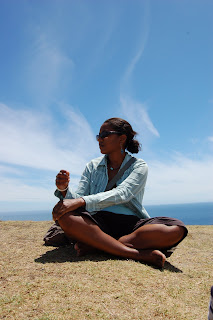 My favourite room is the cosy, self contained room that lies within the realms of my over active imagination. It is like a tardis inside, or more accurately, I suppose, like Wonderland.
One minute there is just enough room for me contently curled up warm and snug on the world's comfiest bean bag, reading endless books and munching my way through delicious food that handily keeps appearing from nowhere.
The next, I suddenly feel alone, surrounded by deepest green water. A brood of baby sharks are playfully piercing holes in my barely floating beanbag. Oh, bugger! I'm falling into the ocean and I can't swim - agh!
My favourite room is also my most feared...

Subscribe to:
Posts (Atom)